4 Reasons to Cheer and “Uncheer” Nigeria’s Power Plants Bids

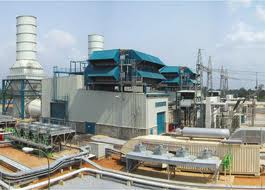
Afam Power PlantThe recent announcement in the media made it known that bids were received and treated for some power plants in Nigeria (read the article here). The event on its own should naturally send wave of excitement through Nigerians who are understandably desirous of better power supply into their homes and factories. Reports of reception of the news are however mixed.

You will not blame Nigerians though for the exhibited ambivalence or even indifference to what should be a cheering news. At least, just over a decade ago, such type of bids were received for telecommunications service in the country, and the whole nation  is much better for that. However, subsequent attempts to privatize or open up other industries – Nigeria Airways/Air Nigeria, Ajaokuta Steel rolling, Fuel subsidy programme, etc – have rather been leaving bitter taste in the mouth of Nigerians not only due to the questionable process of bidding/awards but because hopes are constantly being dashed.

Hoping that there is some level of seriousness to see this round of bidding to fruition, there are actually some reasons to cheer the news:

  1. Power Availability: Since the ownership of the power plants and those of the distribution companies is private, with no more governmental subvention; the revenue drive becomes a must. Of course, without service, consumers PAY NOT. Therefore, respective companies are commercially forced to regularly to provide power. The act of energy provision actually means a lot for the economy.
  2. Job Creation: More like it occurred in the telecom space, the eventual total privatization of the power sector will necessarily create job openings to be expectedly filled by locales. It is also expected that there will be ancillary ventures which operations and survival will be directly underpinned by the deregulated power sector. Hint: there will be lot of requirement for guys with some expertise in electric billing software (operations and development), database development and administration, and of course accounting.
  3. Thriving Small Business Community: It is generally known that small businesses drive economies by providing niche directed products and services, and of course employing throng of job seekers. This sector has been largely moribund due to the crippling cost of power and its unavailability. You have all seen manufacturing outfits relocating to neighboring countries to take advantage of their better power situations. it is therefore expected that small businesses will spring up across the nation; the existing ones can also become more competitive (price wise) since operating costs will largely diminish. We should be seeing lot more of MADE IN NIGERIA things.
  4. Reduced/Eradicated Noise and Air Pollution: This will be a much welcome relief to many neighborhoods and households. The noise and air pollution from the ubiquitous generator sets have not only been killing, but have always been contributing to the decline in the health of many. The constant “jiggy-jiggy” of the generators coupled with their terrible carbon monoxide fumes should be things of the past. May be Nigerians will become healthier and hopefully, wealthier!

However, going by what we all know as the “Nigerian” factor, and government’s and corporate leaders’ insincerity, insensitivity and insensibility to the project Nigeria; people are grimacingly shaking their heads with some reasons to be uncheerful at the news of the bids:

  1. Capital Flight: There is that genuine concern from the masses that there is not going to be any control whatsoever over the coming companies with respect to the percentage of  their profit fit to be transferred back home to their source countries. There should necessarily be an impression on them to reinvest a sizable part of such profit here. We have heard billions of naira being flown across the Atlantic by multinationals in oil and telecoms; their excuse? We’ve paid our taxes! Have they?
  2. High Price: The fact that there are currently going to be few competitors in the power sector, it’s believed that their right to set energy prices (supposed to be influenced by demand/supply and cost of production) may be taken to the extreme with the masses the most hit. We all saw how it was in 2001 with the GSM service talking about the cost of acquisition of a SIM, a phone and of course service charges. Nigerians will expect the government to protect the masses in this regard. We will not mind to pay a fair price for the rendered service, but they should not take undue advantage of our situation.
  3. Jobs In Mirage: The expected benefit of job creation may actually be a mirage considering the fact Chinese companies are winning the bids or in partnerships with the winning bidders. Without being a xenophobe, we may rather see more influx of foreign workers taking up roles not even enough for Nigerians to handle in spite of skills availability. We may only take solace in the other perceived benefits however…….but truthfully there would be job creation and enhancement.
  4. Preferential Treatment of Certain Class: Even though this concern currently subsist with PHCN in that certain areas/neighborhoods enjoy more of the power supply than others for whatever reason; people are worrying that in the hands of the private companies, profit will be paramount. Will there be a just and equitable distribution of energy to all desiring homes and neighborhoods? Will they not shed load away from low income earners areas for the high ones and the industrial estates? You cannot be too sure what to expect.

The ‘uncheering’ concerns nevertheless, the bids are already creating buzzes around the power industry, and hopefully Nigeria will be better for it.

Share your insight on the power reforms and the benefits for Nigerians by dropping your comments below.


Posted in Business, Government, Politics, Technology | Tagged , , , , , , | 4 Comments

Nigeria Needs Love!

Nigerian Flag

Nigeria needs love!

When friends watched the National Conventions of both the Republican and the Democrats of the United States last week, they were thrilled beyond measure with the level of event organisation, quality of speeches, calibre of people on ground and on the podium, and the incisive analyses of every incident and utterances. A friend asked on his facebook wall after  the conventions: “How do we replicate these in Nigeria?”

I answered him: “With love’. Sincerely, Nigeria needs love to live, to grow, to compete among nations and to exhibit such that occurred at those convention grounds last week. Even though I have always known, according to Anthony Robbins, that any action/speech of man always has two motives: that which you want people to see, and the the other real one in your mind; you can still decipher from majority of the speeches at those grounds that those guys actually mean well for their country. Speaking and acting, across the two main parties, irrespective of the values differences, you would feel the sense of love and the commitment to “We the people..”

Though, I was actually almost answering him: “With education”. But then I realized that only knowledge and awareness could not do the job. Many learned Nigerians would even prefer to be brain drained out of the country, instead of raising the flag, not because there is no feeling for the nation but because the country, through her leadership, refuse to return the love. It has to be mutual you know! Nigeria needs love, and Nigerians need love.

The current “leaders” and the aspiring ones need to really have passion for the country, and not only for their tribes, family or pockets. It is only with real love and passion that leaders will understand the suffering of the masses and make genuine concerted efforts to right the root cause(s) of the anomaly. Only love for the nation will inspire the leaders to make right investment in education, health care, security and the environment for the betterment of the current generation and even the ones coming. Without love, which should create beneficial policies, there will never be level playing field for investors to operate, for real businesses to thrive and by extension, creating real employment for the vast number of jobless citizens. When real love is present in the hearts for the green-white-green, we would be able to see, not only such displays at the conventions, but also real implementation of ideas.

But do they care? Michael Jackson aptly sang it: “All I want to say is that, they don’t really care about us.”

However, Nigerians owe themselves a duty, and a great one at that to the coming generations, to “shine their eyes” very well in the next electioneering exercise. Pick and vote candidates with real affection for the nation. Not the ones that will perpetuate destroying our health care system while they get treatment abroad,  not those that are keen only in building “class rooms” but not real school system while their own wards fly out for foreign education. And not the ones that will produce graduates and refuse to bother about their lack of, or under, employment, while allowing foreigners (even with less skills) come in and edge the locals out of work. We really have a job at hand. How do we know them? By their fruits of course!

Hopefully, one day; for the sake of our children; Nigeria will be blessed with loving and caring leaders.

Posted in Business, Government, Politics | Tagged , , , , , , , | 4 Comments

Is My Pension Really Safe?

Stanbic IBTC pension – my PFA

For centuries, it has been the practice for either employers, government or both to extend to their aged retired workers some monthly “stipend” to keep body and soul together. This  is often paid to the retiree throughout the remaining part of his life as a means of appreciating the aged for serving the state or the enterprise with all the vigor and energy of his youthfulness. Pension – whatever the origin – becomes the manna to which workers, especially the blue-collar and the lower ranked white-collar ones, look towards.

With the promulgation of the Pension Reform Act (PRA) in Nigeria in 2004; it becomes mandatory for both public and private (exceeding 5 employees) enterprises to engage in contributory pensions scheme where both the employer and the employee are required to contibute a minimum 7.5% of the employee’s income into a retirement savings account (RSA) to be held with a pension fund administrator (PFA). The contributions into the scheme are expected to be invested, with the objectives of safety and maintenance of fair returns on amount invested, through vehicles already specified under Section 73 of the Act. Perhaps, in order to cut the risk of mismanagement or “mysterious” disappearance of funds, the Act provided that the fund and assets of the pension fund are to be held in trust for the employees by a pension assets custodian (PAC). Though I’m yet to understand the period when the Custodian takes possession of the assets from the PFA – I only know that the Custodian receives the contributions (from the employer) on behalf of the employee and passes same on to the PFA.  In order to ensure some level of control, the operations and management of both the PFA and the Custodian are to be guided by the National Pension Commission (PenCom), a body corporate established to regulate, supervise and ensure the effective administration of pension matters in Nigeria.

However, the incidents of recent months concerning huge pension frauds unearthed by both Economic and Financial Crimes Commission (EFCC),  and the Senate give rise to some justified concern of how really safe people’s pension are. The Police and the Power Holding Company of Nigeria (PHCN) pension frauds are being reported to the to tune of  several billions. What is supposed to be many people’s hope of continued survival after years of labor is practically being fraudulently scooped away by some heartless few for their personal gains. Yet they will keep summoning the pensioners for periodic verification, making them to stand on long queues, and some dying out of not only exhaustion, but hunger and regret of having to spend their lives in the service of whoever and whatever. You would probably appreciate the pains of the pensioners if you have an aged one looking forward to the monthly crumbs which Jairam Ramesh, an Indian cabinet minister, called “an insult to the dignity’ of the elderly; going through the humiliation of being tossed around for documentation and verification, only to hear that the so called pot of soup have been drilled. My father went through drills like that a couple of decades ago, so I know the feelings.

Though the reported frauds have all been in the public service arm of the scheme, everybody (either in public or private sector) needs to be alarmed as to whether his pension – deducted monthly from his income – is really safe. And you should be alarmed, because it’s your money. This becomes necessary noting that the same PenCom ought to oversee the “effective” administration of both sectors, and the fact that the perpetrators of the reported frauds are never docked nor prosecuted. The only thing we have seen or heard are rebukes and curses from the Senate President. It is the Section 86 of the Act (you can download the entire Act here) that says:

“Any pension fund administrator or custodian who misappropriates pension funds commits an offence and is liable on conviction to a fine of an amount equal to three times the amount so misappropriated or imprisonment for a term not less than 10 years or to both fine and imprisonment.”

yet despite having a knowledge of possible perpetrators, they continue enjoying their loots. We would not appreciate the usual Nollywood type of probe, wrist slapping, a silent whisper of “you are on your own”. We need action. We are talking about people’s livelihood here.

It is also a huge concern to me that the Act, through the Commission, does not really stress the possible effects on the contributions of workers where either the PFA , Custodian or both become distressed; or where funds are mismanaged or embezzled. We saw share prices plummeting when it became known that shareholders’ funds in some banks have been mismanaged by the directors just before Sanusi Lamido assumed CBN governorship. In fact, Sanusi opined then that the shareholders have lost their investments in the banks since the institutions had to be bailed out.

In fairness to the Act and the Commission though, there are several regular statutory examinations, checks and penalties that should safeguard the funds. But what happens in the event of undetected, colluded, or window dressed, distress, fraud or/and mismanagement? Will the pensioners face the same fate as the other banks’ investors? Lose their life savings to the system? As far as I know, it is only in the case of revocation of licences of a PFA or a custodian that the Act stressed that the entitlements of any beneficiaries of the retirement savings account under the scheme would not be prejudiced. In essence,it is only in that instance there is a mention of a possible guarantee.

In some years from now, people of my generation will be eligible to access their pension having reached the minimum age 50 as stated in the law. Do we have any guarantee that these funds will still be available by then? I mean, is my pension really safe?

Share your insights and understanding of this concept by dropping your comments below.

Posted in Business, Government, Politics | Tagged , , , , , , , , , | 3 Comments

Looting African Leaders Are So Foolish

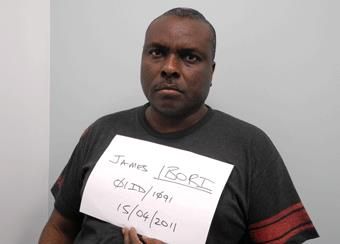
James Ibori – Why?

In a continent blessed with abundant natural and human resources, the combination of which may not be that available in some other continents; it is common place to witness the curse of the foolish leaders bleeping its wealth for selfish motives. Maybe they know it themselves or maybe not, the looting African leaders are nothing but fools.

There is a taunting mantra out there now saying that this century belongs to Africa. They claim that since virtually other continents have shone their advantage to the world, now Africa, the current heaviest recipient of FDI (Foreign Direct Investment), has the potential to shine. Permit me to say that Africa has already shone, and still exhibiting, a genetically woven competitive advantage – Slavery!

In the slavery of old, the powers that were in the Western World risked their lives and resources to come down to Africa to transport their catches to the sugar fields at home. With the worldwide “abolition of slavery”, African nations entered the phase of colonialization where their mineral resources were being plundered for practically no charge. Kwame Nkrumah would not believe that when he was coining the neocolonialism term (suggesting the practice of former colonial powers using capitalism, business globalization, and cultural imperialism to control a country, rather than direct military control or indirect political control), his colleagues in the continental leadership will continue to willfully, hand over the resources of the people to the former lords. If they care to listen awhile, they would hear Nkrumah speaking to them from the grave: “You fools! The same wealth we fought them to leave for us to develop our land and its people, for our descendants to feel free for once, you are returning to them without duress; I’m ashamed of you looting thieves.”

A teacher of mine once mentioned in class that with avenues deliberately opened for political office holders through which they can be legally “rich”, we should not see them flagrantly robbing us of our collective wealth. But these “leaders”, both political and business, having thrown shame and pricking conscience into the winds will not stop but take our extractive resources – oil in Nigeria, Libya, Angola; diamond in Sierra Leone and Liberia, Cocoa in Cote d’Ivoire as the ATM machine vomiting billions of dollars into their personal purses. A regular sharing of excess crude revenue, VAT and 13% derivation (for oil producing states) is done in Nigeria with billions of Naira going to each state of the federation aside the statutory monthly allocation from the federation account; contracts are being over-inflated with the excess valuation finding its way into some guys’ pockets, you would have also seen them greedily short-changing the work force or agencies of their subventions. You can imagine other hideous ways these “leaders” would be employing to extract the juice of livelihood from the citizenry.

Now, to crystallize their stupidity, they might be thinking they just safe kept their money in the various Swiss, American, British, Caribbean or even middle eastern banks or properties; but even an idiot knows how banks create money. The receiving economies rather thrive on the stashed monies in ways not too hidden:

  • The cumulative loots give an unjustifiable position of the receiving banks (we may need to confirm maybe not much African loots have found their ways into Spanish and Greek banks).
  • Since there will not be a quick call on the money, the loots provide a cheap source of funds for business startups,  operations, and research & development; thereby providing employment for their children while ours roam the streets aimlessly.
  • When you have contracts or joint ventures with enterprises in the receiving nations; imagine them accessing your own money to execute jobs here for which you will still pay. Double rape you may say.
  • In essence, the receiving nation gets some free lubrication to oil it’s national wheels.
  • The receiving nations would also not be out of order to lend back the money (or part of it) to the victim countries when they are approached for loans- the burden to be borne by generations still unborn, unless “forgiven”.
  • Or, very commonly and the most painful, the looting leader is exposed, criminalized or convicted; then the receiving nation freezes the assets which may or not be returnable. Even, if they repatriate the loot to the victim nation, they are quite sure the money will soon find its way back to their nests anyway.

In my view, knowingly walking into the den of the above raised situations is stupid.  Or you don’t think so? But do they care?

However, I’m making a call, in resonance with Yogi guru Baba Ramdev’s protest of Indian black money stashed abroad, that these loots be brought back to the continent. Looters! Invest the monies here, develop our ailing and absent infrastructures, put smile on our faces and give hope to our children – you can keep the returns on these investments, but only in Africa. Thereafter, the looters, rather the repentant leaders, might be forgiven, admired and even praised. Don’t be foolish!

Posted in Government, Politics | Tagged , , , , , , | 4 Comments